For people taking a job in the Nashwauk area, the most practical question is often not the offer letter. It is the daily map: where school happens, where after-work life happens, and how much of that routine can stay close to home. In Nashwauk and Keewatin, that map is unusually compact. The two towns share one school district, and both have nearby Mesabi Trail access points, so family logistics and free-time routines can be built around a small stretch of Itasca County rather than a long regional drive. (isd319.org)
One district, two community identities
Nashwauk and Keewatin did not simply grow into one school system by accident. The district says the communities were separate school districts until the 1962/1963 merger that created Nashwauk-Keewatin Spartans. Today, the district’s main K-12 school sits at 100 Spartan Way in Nashwauk, while Keewatin Elementary serves the younger grades at 300 West 3rd Ave in Keewatin. That split matters for working families because the school system reflects both towns instead of asking families to organize their lives around a distant countywide campus. (isd319.org)
Keewatin Elementary is not a tiny afterthought, either. The district says it serves approximately 300 students in kindergarten through 6th grade and hosts Early Edge preschool. For parents balancing new employment, that is a useful clue: early-childhood care and elementary education are already part of the local structure, not something that only exists in a larger city farther away. If you are comparing job offers, that kind of setup can affect whether a move feels manageable or constantly rushed. (isd319.org)
Why the trail map matters after the shift ends
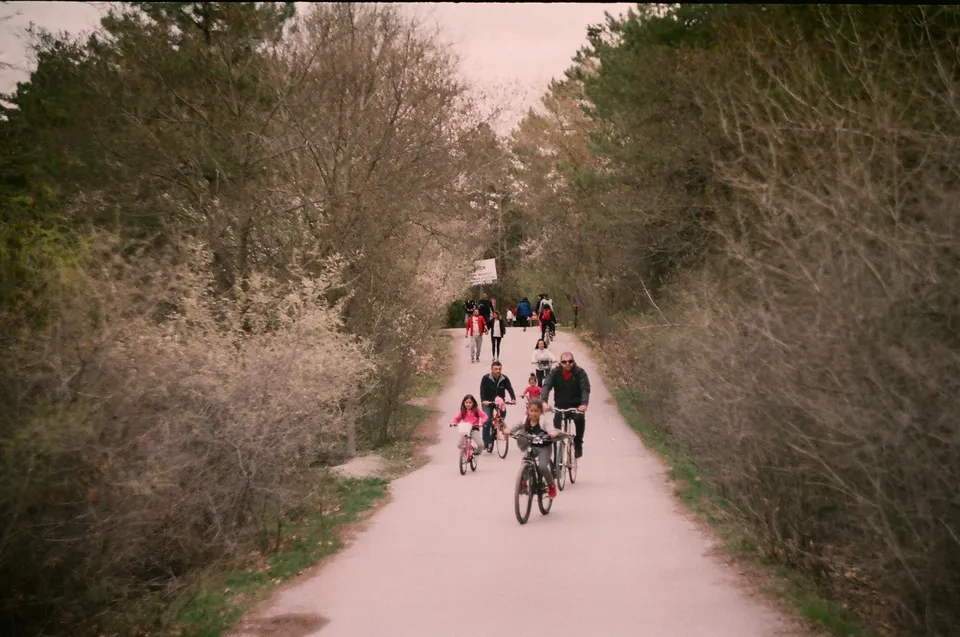
The Mesabi Trail gives another answer to the question of what daily life looks like here. Its biking guide lists the distance from Nashwauk to Keewatin at 5.4 miles, and the trail’s town pages identify access points in both communities. In Keewatin, the access point is at West 3rd Avenue and North 7th Street; in Nashwauk, parking is listed near 703 1st Street. That means the same short corridor that helps connect errands can also become the place where a family bike ride, a quick walk, or a weekend reset fits naturally into the week. (mesabitrail.com)
The trail network also puts Nashwauk and Keewatin in a broader Iron Range pattern rather than isolating them. The Mesabi Trail’s access-point map includes nearby places such as Coleraine, Bovey, Calumet, Taconite, Marble, and Grand Rapids, which helps explain why local families often think in terms of a connected corridor instead of a single town boundary. For a worker deciding whether a commute, daycare pickup, and evening recreation can all fit into one day, that wider map is part of the decision. (mesabitrail.com)
What applicants should read into that local layout
A compact school-and-trail setup does not remove the usual questions about wages, schedules, and benefits. It does, however, change the way those questions feel on the ground.
- If you have school-age children, the fact that Nashwauk and Keewatin operate within one district can simplify drop-off and pickup planning. (isd319.org)
- If your job is in one town and your home is in the other, the 5.4-mile trail corridor is a reminder that the two communities are close enough to share daily routines, not just a school logo. (mesabitrail.com)
- If you are relocating for work, the local choice is not just housing or hours; it is whether the rest of life can stay inside a small, familiar map. (isd319.org)
What employers should notice
Employers in and around Nashwauk often compete on more than pay. They compete on how easy they make life look for a worker who is already juggling school schedules, transport, and after-work obligations. In a place where the district is shared and the trail network is close by, a shift plan that respects school release times, predictable start times, and reasonable commute patterns can carry real weight with applicants. The local geography will not solve staffing by itself, but it does give employers a clearer sense of what stability looks like for the people they want to hire.
That is especially true when a candidate is choosing between staying in the Nashwauk-Keewatin corridor and stretching farther out. If the family already sees the school day, the workday, and the evening routine as part of one small map, a job can feel practical in a way that a larger commute never will. That is one reason local employers benefit from thinking like residents, not just recruiters.
A simple way to test a move
Before you accept a position, look at the school address, the likely worksite, and the nearest Mesabi Trail access point on the same page. If those three places sit comfortably within one routine, the move will probably feel easier than the raw miles suggest. If they do not, ask more questions before you commit. The difference between a workable relocation and a stressful one is often only a few exits, a few blocks, or one school bell.
For help thinking through the local fit, contact Express at 218-967-5669 or grandrapidsmn@expresspros.com.