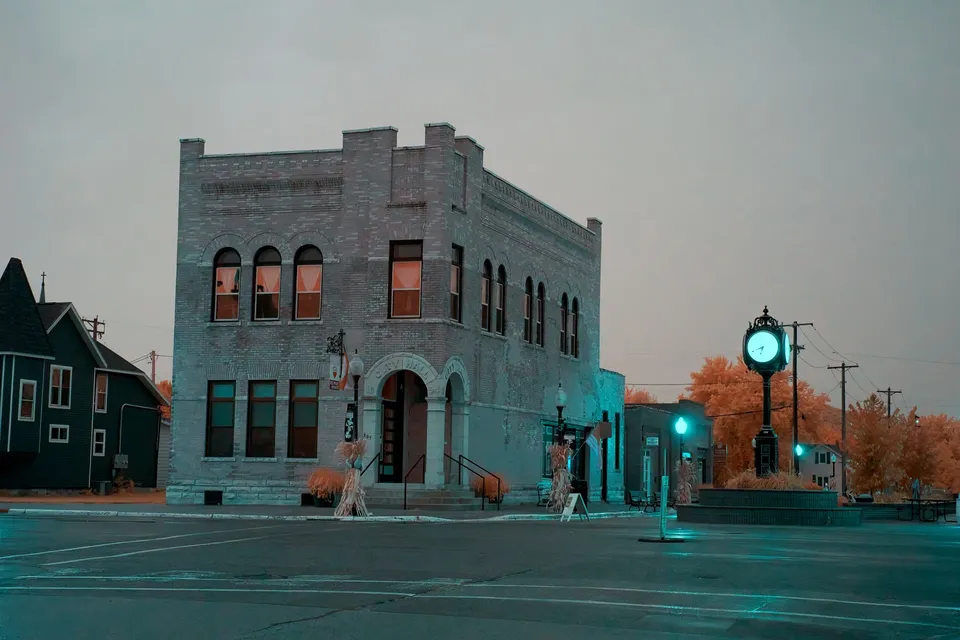
In Nashwauk, the first useful question is often not “Who is hiring?” but “Which part of the region fits the life I am trying to build?” That matters in a city of just 970 people in the 2020 Census, where the city government still handles practical basics like utility administration and where the official municipal office sits at 301 Central Avenue. Nashwauk is small enough that work, housing, and daily errands stay closely connected, yet organized enough to run real civic systems rather than leaving everything to outside agencies.
That local structure is worth paying attention to because Nashwauk city and Nashwauk township are separate geographies. For households, that distinction can shape more than a mailing address. It can affect the exact set of services a family uses, how a worker thinks about commuting, and how much of daily life happens inside town versus on the road. In a place this compact, small boundary differences can change the rhythm of a workday in ways that matter to both applicants and employers.
The most useful local advantage is a two-campus training map
For people in Nashwauk, Keewatin, and nearby Iron Range communities, the strongest verified workforce story is not a single employer or one giant hiring wave. It is the training network. Minnesota North College’s campuses in Hibbing and Grand Rapids give local residents two practical directions to move in: one campus on the Hibbing side and one in Grand Rapids through the Itasca campus. The college’s program list includes nursing, peace officer education, health professions, early childhood education, engineering, natural resources, GIS, construction management and supervision, industrial mechanical technology, manufacturing technologies, IT networking and security, diesel mechanics and heavy equipment, electrical maintenance and construction, welding, and transfer pathways.
That mix matters because it lines up with the kinds of jobs that actually keep a small Iron Range economy moving. A person who wants hands-on work can look at welding, industrial mechanical technology, diesel mechanics, or electrical maintenance. Someone aiming for a licensed or health-related job can look at nursing or health professions. A worker who wants a foothold in public-facing community life can look at early childhood education, peace officer education, or office-support pathways tied to business and IT. The college is not offering abstract “career readiness”; it is offering a broad set of real occupations that can support local households without forcing them to move far from home.
Why this matters for applicants, adults changing jobs, and relocating families
The most practical detail in the college record is not just what is offered, but how it is organized. Minnesota North College’s registration page says students are assigned an advisor on their campus who helps build a schedule. For a working adult, that is a meaningful signal. It means the region’s training system is built around campus-based planning rather than a one-size-fits-all online assumption. That does not guarantee every class will fit every shift, but it does show that local learners are not left to figure out their path alone.
That is especially relevant in a small community. A Nashwauk household may include one person working steady hours, another person in school, and a third person juggling childcare or seasonal work. In that setting, the right question is often not whether training exists somewhere in the region. It is whether the route from home to class, from class to work, and from work back to home is realistic for the whole family. The verified regional pattern says yes: the nearby higher-education hubs are Hibbing and Grand Rapids, and the college structure supports both occupational and transfer paths.
What the local evidence suggests about the job market
The evidence in hand points to a labor market built around skill families rather than one narrow occupation. Welding can lead into fabrication, shop support, and maintenance. Industrial mechanical technology can support plant upkeep and field repair. Diesel and heavy-equipment training can connect to trucking support and mobile equipment work. Nursing and health-professions training can support clinics, long-term care, and other care settings. Early childhood education and office-related programs help sustain schools, childcare providers, and local administration. Those roles are different, but they share one important trait: they help a town function every week of the year, not just during one project cycle.
The city record adds one more useful context point. Nashwauk’s utilities page shows the city has completed and submitted its service line materials inventory to the Minnesota Department of Health, which is a good reminder that municipal systems here are active and managed, not symbolic. For employers, that means local operating conditions include real utility administration. For relocating households, it means a small-town address still comes with the usual practical questions about service, billing, and city processes.
A better way to think about Nashwauk employment
If you are looking at Nashwauk from the outside, it is easy to flatten the town into a mining story or a commute story. The verified local picture is more interesting than that. Nashwauk is small, but it sits inside a region with a working municipal core, a defined postsecondary network, and training options that fit both hands-on trades and longer credential paths. That combination is what gives the area its stability. It means a job search can be matched to a training plan, and a training plan can be matched to a household’s real routine.
For applicants, the takeaway is simple: do not search only for openings. Search for the path that makes the opening sustainable. For employers, the lesson is equally direct: local hiring will work better when the role matches the region’s available training, not when it assumes workers can magically appear with the right background.
If you are planning a move or a job change, start by matching your target role to the Hibbing or Grand Rapids training corridor, then reach out for help planning the next step: call 218-WorkNow or email the office.